During the late 1990s and early 2000s, a significant shift occurred in Deaf education. This period marked a transition for many Deaf children from Deaf Units classrooms to mainstream classrooms. This change was influenced by evolving educational philosophies and advancements in technology, such as cochlear implants. The last Deaf students attended schools like Hamilton West and Melville Intermediate School before moving on to Kelston Education for the Deaf, Auckland, where they spent five days a week and returned home over the weekend.
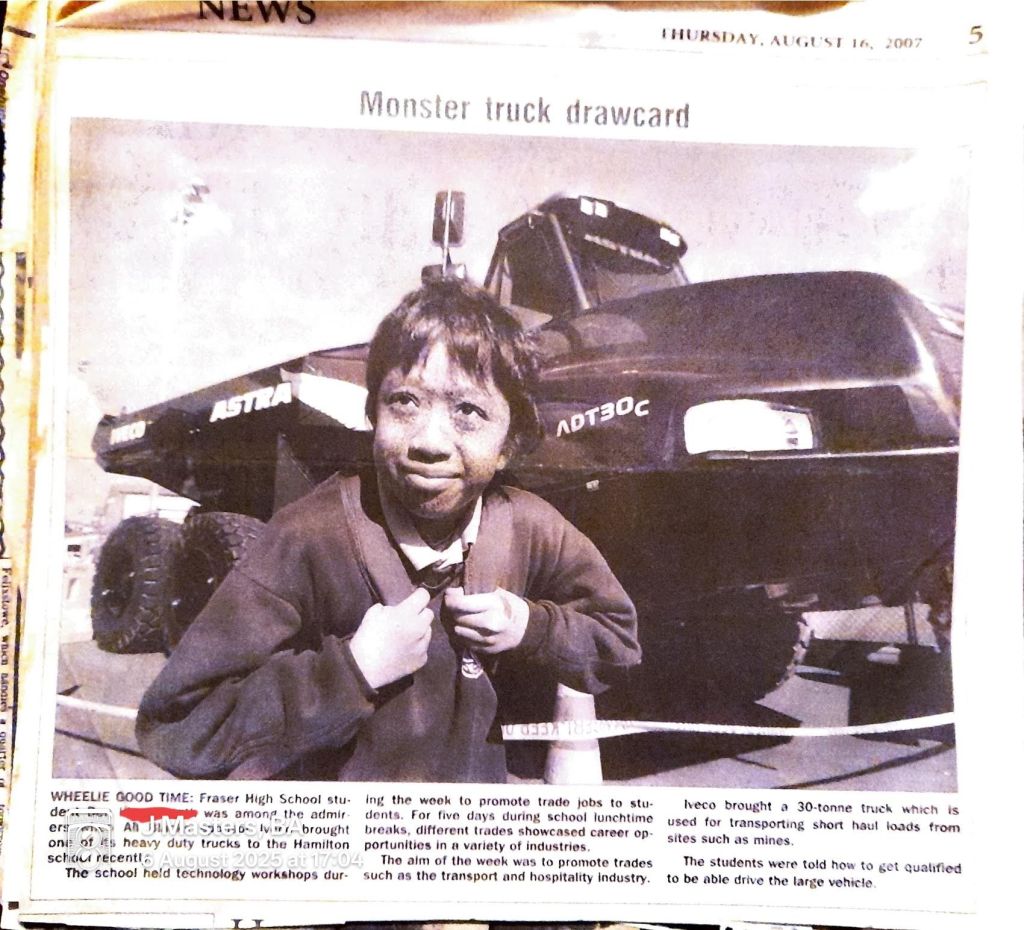
Jean, a historian and researcher, was a qualified deaf teacher aide to two Deaf male students at Hamilton West and Melivlle Intermediate School from 2004 to 2008. They were the only Deaf students mixing with the hearing students in the mainstream classes. This unique experience presented both challenges and opportunities for the students, as they navigated a predominantly hearing environment. In the final years, one Deaf student attended Fraser High from Melville Intermediate, while a second Deaf student went straight to Kelson Education for the Deaf from Hamilton West School.
Let us get to know the Deaf students better: one has a Deaf mother and an older hearing brother, while the second has an older hearing brother and hearing parents.
Remember, in this book/website, the first names of these students are only for the readers/audiences to understand and appreciate their unique experiences.
Ben’s parents came from Laos, a landlocked country, to New Zealand for a new life. His parents do not speak English fluently today; they speak the Lao language at home. Lao is bordered by Myanmar and China to the northwest, Vietnam to the east, Cambodia to the southeast, and Thailand to the west and southwest. Ben does not understand or know the Lao language and its history very well, and his parents wish for him to communicate in two languages, highlighting the importance of bilingual communication for Deaf students. Ben shared the same culture and food with his family in his daily life. Jean remembers Ben’s parents and his brother, Khong and his wife, for four years as a qualified deaf teacher aide and ESOL tutor. Ben’s first language is NZSL, and English is the choice for his family, as they prefer to write in English.
Charles came from a home where his Deaf solo mother and an older hearing brother lived, while his father, also Deaf, lived in Australia. His Deaf parents attended Deaf Education. His mother was at Hamilton West School before moving to Kelston Deaf Education, where his Deaf father was also a student. Charles went to Kelston Education straight from Hamilton West. Charles communicates in NZSL, and his older brother is a CODA (Child/children of the Deaf Adult), where their Deaf mother depended on her older son as an interpreter if there was no interpreter available for her. Jean knew Charles’s mother in the Deaf Community and briefly at the Hamilton West School before she went to Kelston Education, and Jean went to Melville Intermediate through students’ day in the late 1970s and currently.
Ben and Charles have different interests in each – Ben loves Mortal Kombat Heroes and expensive mobile phones, while Charles loves drawing car arts like his father, and fast cars. They have different skills in the classroom, such as Ben improving in English writing and Charles being quick with Maths without a calculator. Charles was quick to do additional maths work when his mother and he went grocery shopping. He always beat his mother to the punch by answering the total amount. Jean recalled Charles telling her about baking cakes at home to surprise his family, which was his love of making cakes.
How do they manage to communicate with hearing students in the classroom without Jean available? Ben was a small quantity of loner; however, there was always someone to keep an eye on him, especially three ‘troubled students’ from a different classroom as well. For example, Jean came to the classroom one day and found Ben was not there. One of the troubled teenagers told Jean that he had seen Ben near the canteen asking for something. Ben came into the classroom with a different reason, and Jean told him to tell the teacher the truth, for Jean knew what he had been up to. The teacher realised the trouble teenager had been honest and kept an eye on Ben for her because three other trouble teenagers had been watching us communicating in NZSL and could not understand why we talked the way we did in the classroom and outside the classroom. Jean was not bothered by these three troubled teenagers as long as it was okay in the safe environment for Ben and his other students with neurodiverse disabilities.
Charles had a good mate from the same classroom, and they would often hang out, foolishly playing around while his mate learned to communicate in a few sign languages. They shared the same interests and hobbies. His mate would always ask Jean about finding solutions or problem-solving when Jean was away.
The parents of Ben and Charles decided to send Ben and Charles to Kelston Deaf Education, where they communicate in NZSL as their first language and to meet other D/deaf students there. Jean ended her teaching career and pursued her part-time course in a University degree in BA, completing it in 2009 after doing a 5-year part-time study and working as a teacher aide.
 Waikato Deaf Units Schools History
Leave a comment